

Vintage Hepplewhite Sideboard Makeover
This post may contain affiliate links, meaning I make a small commission on qualifying purchases.
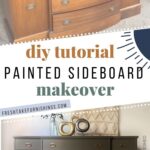
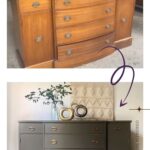

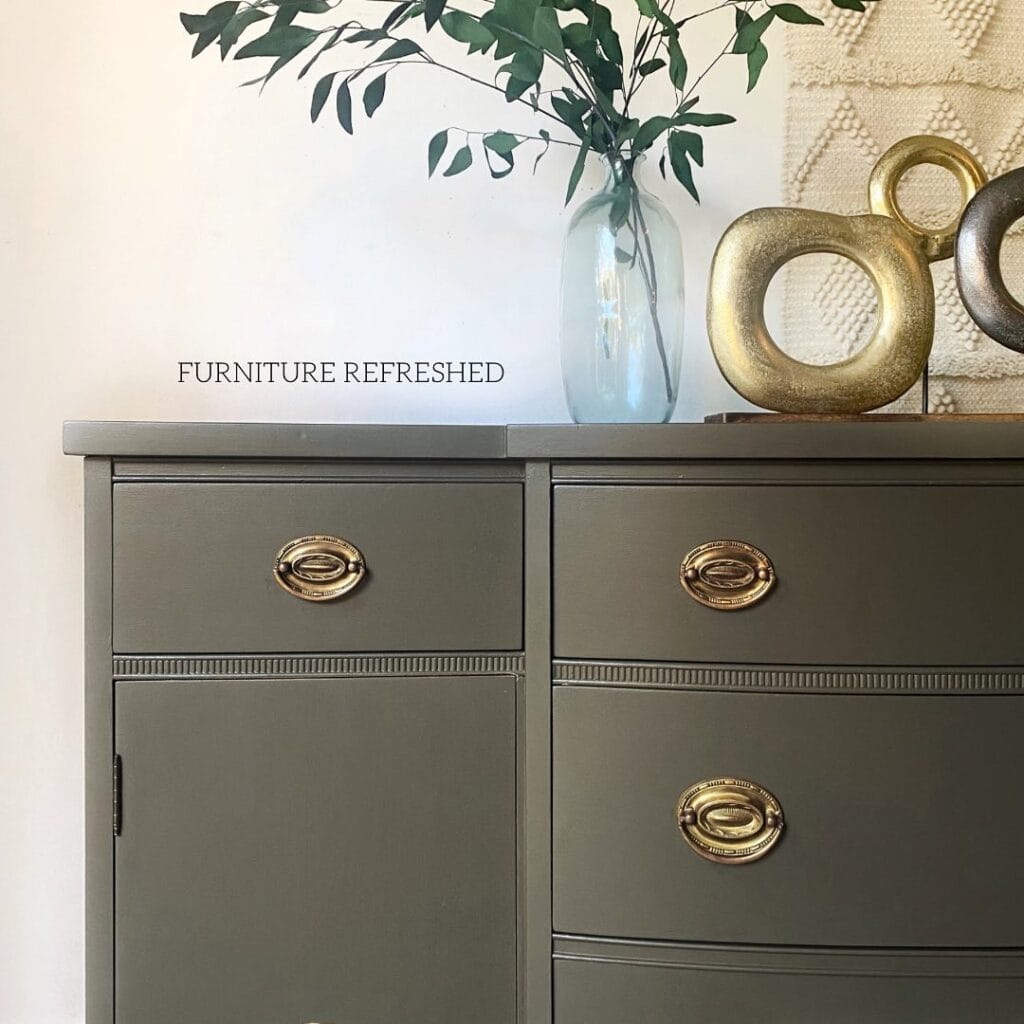
When I came across this vintage Hepplewhite sideboard on Facebook Marketplace, I knew I had to have it! A classic piece with tons of storage, and I knew it would be a beautiful transformation. Keep reading for a step-by-step guide to this vintage Hepplewhite sideboard makeover.
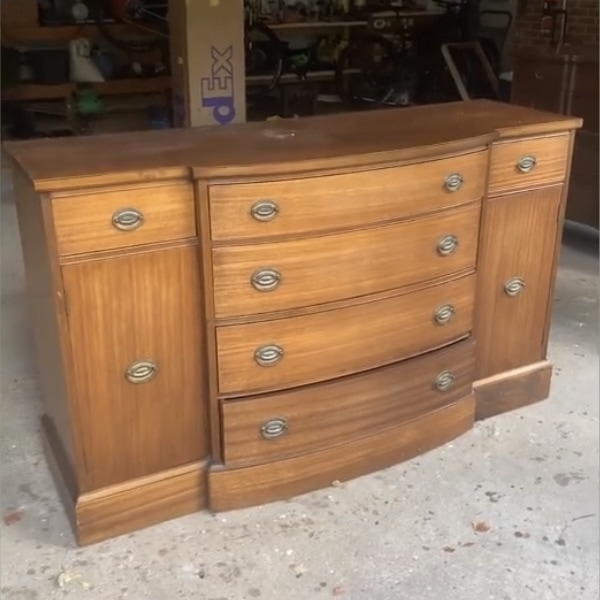
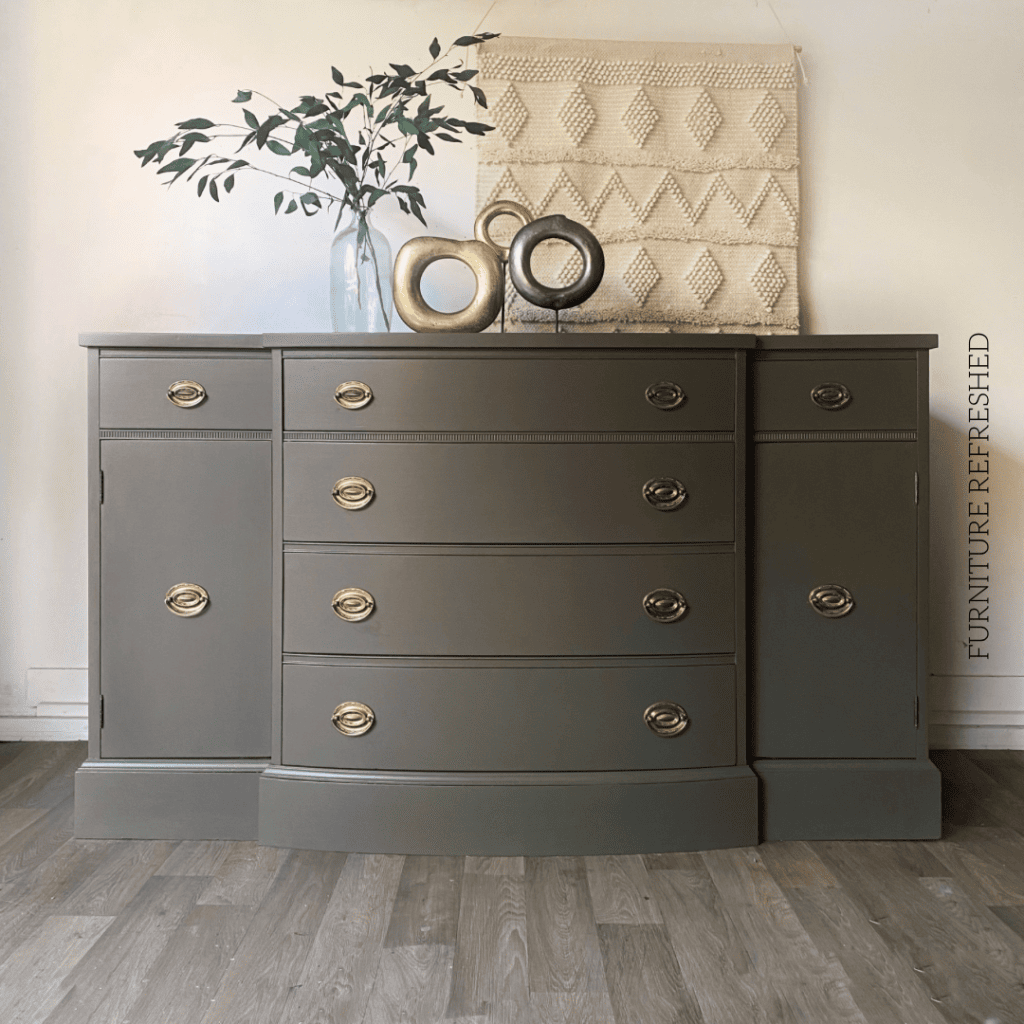
In these quick guides, I walk through the steps and products I used for a particular makeover. Interested in learning more about a particular step or process? For more information, please refer to the links at the bottom of this post, where I provide detailed tutorials on these steps.
A note on product links
This post contains Amazon affiliate links, meaning I get a small commission on qualifying purchases, at no cost to you.
Makeover Steps:
- Repair work. Full disclosure – this is not usually my first step. I almost always clean first, but I broke one of the drawers just trying to remove it (I’ve never had a drawer this stuck). So I had to glue one of the dovetailed joints back together. I applied my favorite wood glue with a blunt-ended syringe, then clamped in both directions overnight. Then it was time to move on to the rest of the piece.
- Cleaning. I cleaned the exterior of the piece with a degreaser, using these ScotchBrite pads to really scrub off any dirt and grime, then wiped it back with a microfiber cloth. Then I clean the interior, bottom, and back with a mixture of water and Dawn dish soap. Finally, I’ll wipe back the piece again with water and a clean microfiber cloth.
- More repairs and Scuff Sanding: There were a few minor scratches on the top that I filled with Bondo Glazing and Spot Putty, using these plastic spreaders to apply. After allowing the putty to dry, I sanded the entire piece with 220-grit sandpaper using my SurfPrep sander. However, you don’t need a fancy sander to do this step! Hand sanding works fine – you aren’t trying to remove the finish, just scuff up the existing finish to help with primer and paint adhesion.
- Priming. I was planning a dark color for this project, so I decided to use Melange’s stain-blocking primer in gray to seal up the piece prior to painting.
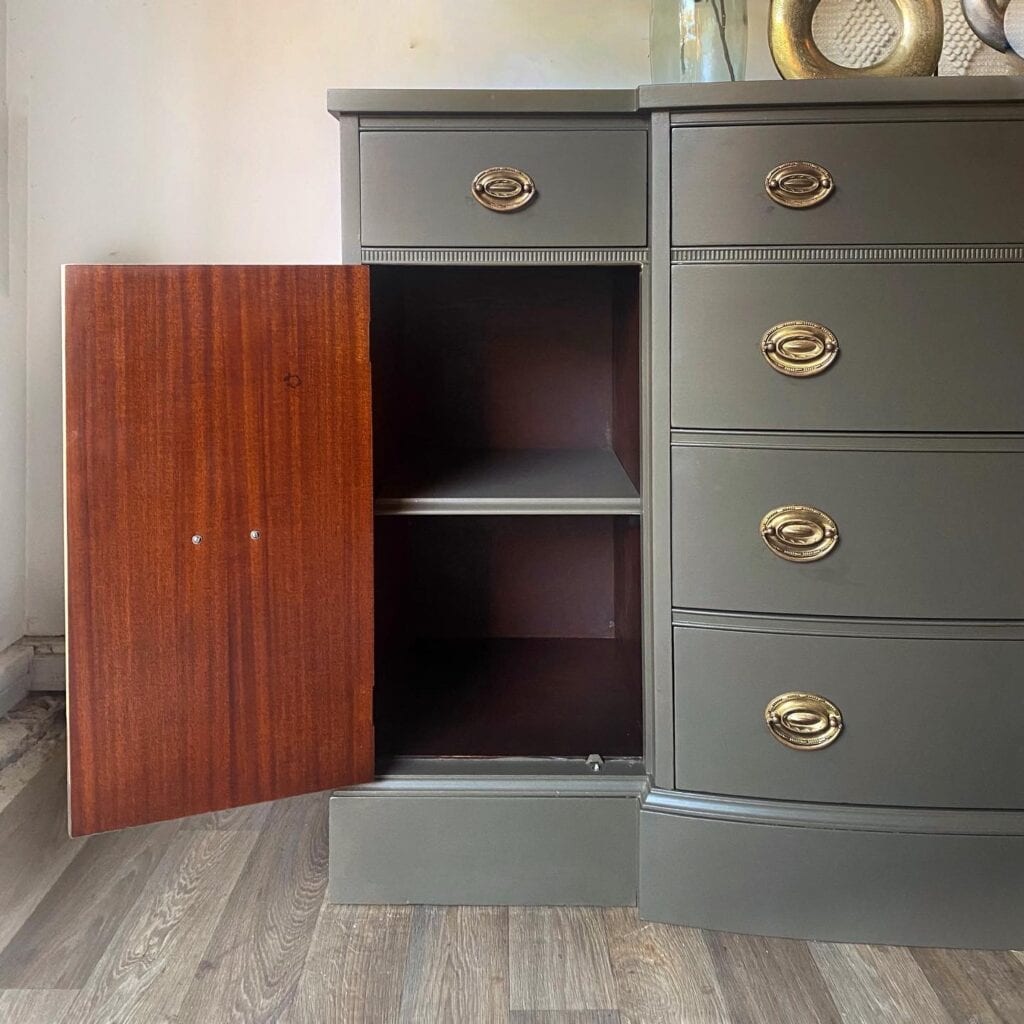
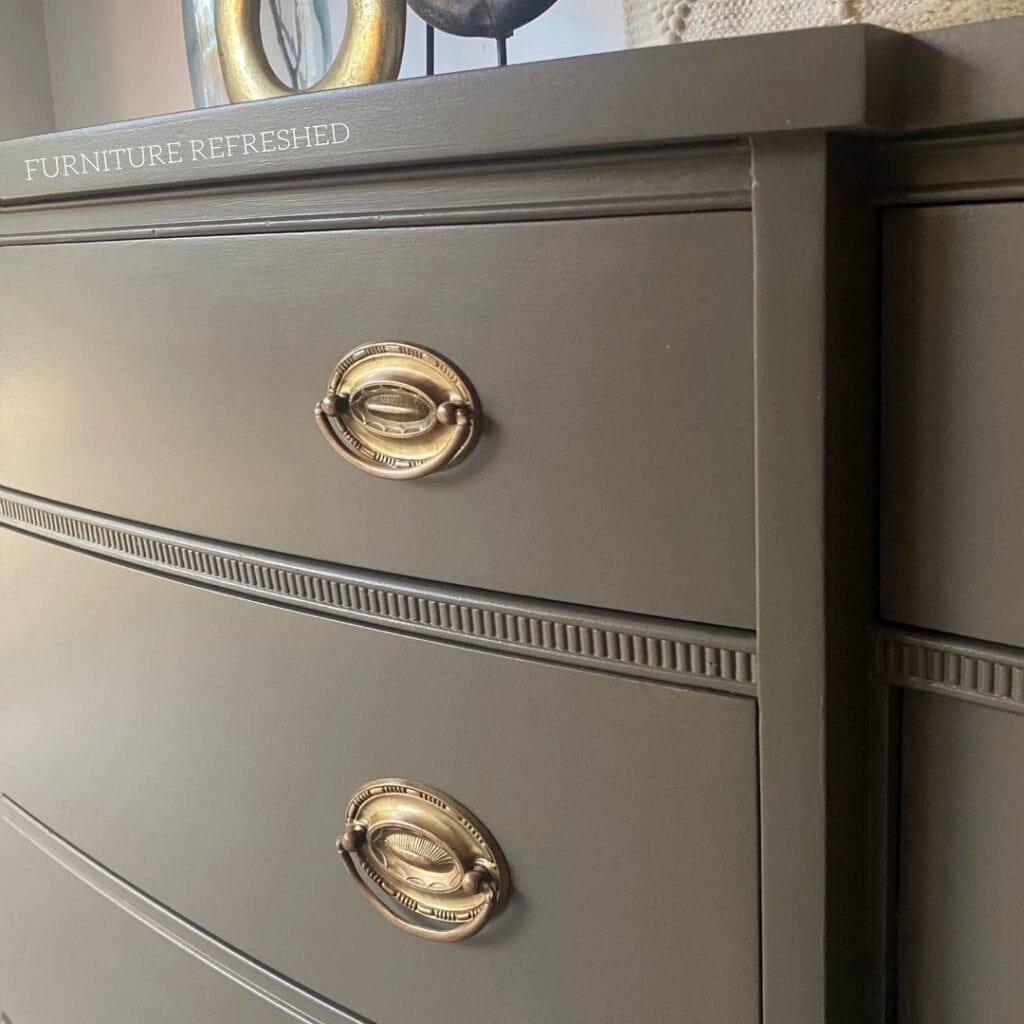
- Paint. I painted this dresser in the color Restoration Bronze by Melange Paints.
- Topcoat. I sealed this piece with one of my favorite topcoats, General Finishes High Performance Topcoat in Flat. I use this Zibra brush to apply. The combo of these products gives me a smooth and reliable finish.
- Interior Refresh. I decided not to paint the inside of the cabinets and used Restor-A-Finish in Dark Walnut, followed by Feed-N-Wax to give the wood a good refresh.
- Update hardware. I wanted to keep this beautiful vintage hardware, so I cleaned it by boiling it in a 50/50 mixture of vinegar and water for 10 minutes and wiped it clean. Once clean I loved the vintage patina so I decided to leave it just the way it was!
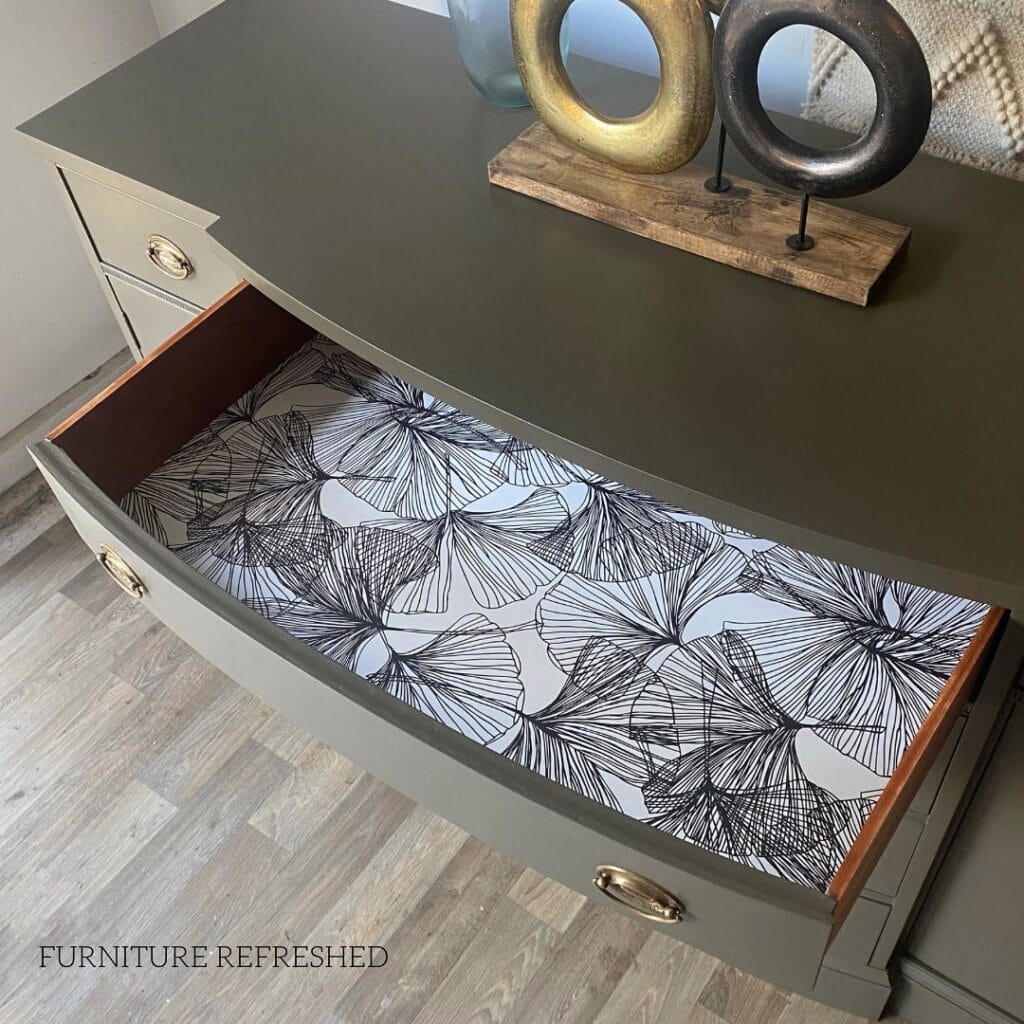
- Drawers: I wanted to freshen up the drawers, so I used Howard’s Feed-N-Wax on the drawer sides (inside and out) and lined the bottoms with a coordinating peel and stick wallpaper.
Would you like to save this?
Want to learn more about each step? Check out the links below:
- How to Prep Furniture for Paint
- Hand-Painted Furniture: How to Get A Flawless Finish With a Brush
- How to Seal Painted Furniture: Protecting With a Top Coat
- Cleaning Old Hardware: Make That Vintage Hardware Shine Again!
New to furniture painting?
Get my FREE Beginner’s Guide to Painting Furniture! This guide walks through the steps of a furniture painting makeover and includes a downloadable project planner and supply checklist.