

How To Paint Furniture With A Brush and Avoid Brush Marks
This post may contain affiliate links, meaning I make a small commission on qualifying purchases.
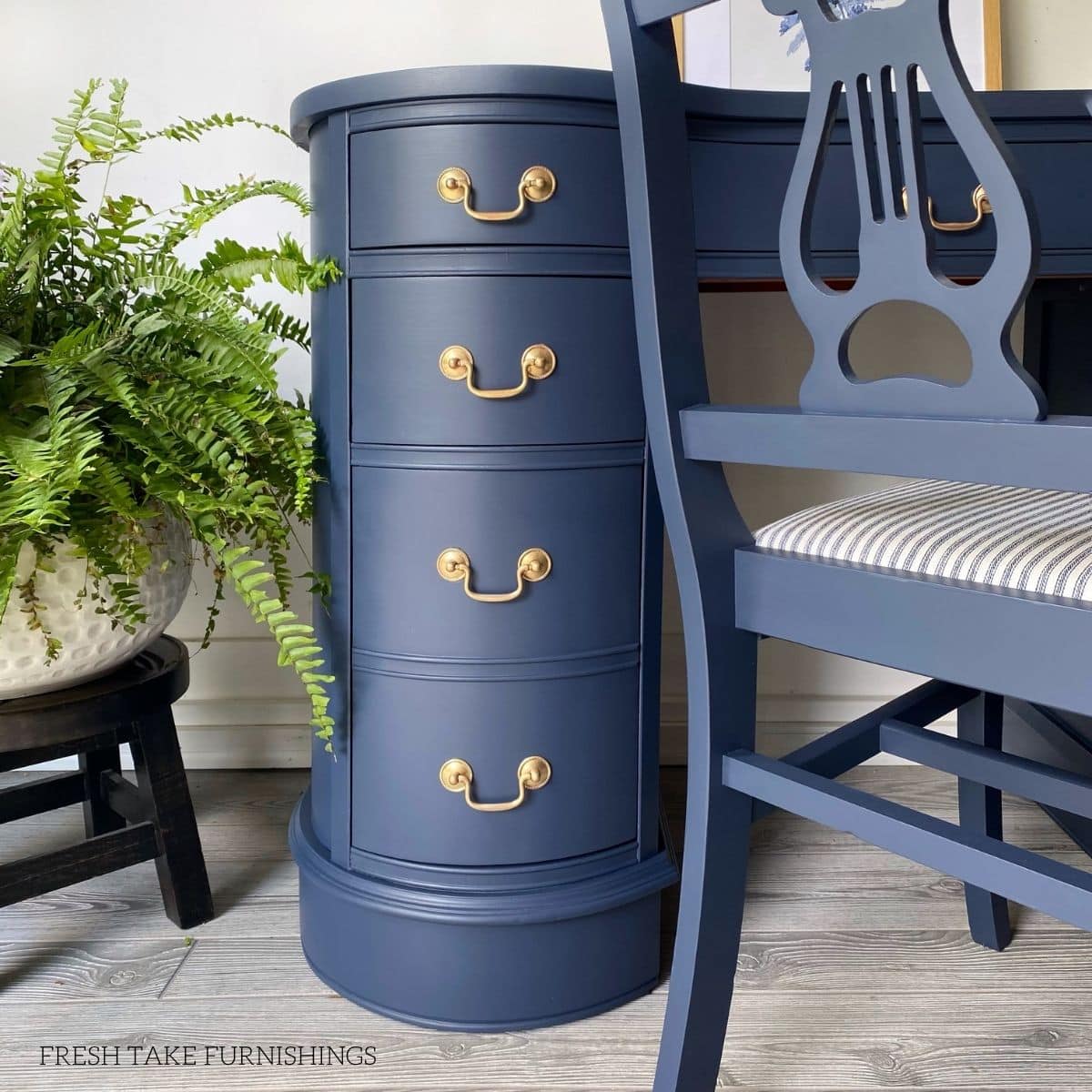
Want a professional-looking paint finish? You may think you need a paint sprayer to achieve this look. But you can absolutely pick up a brush and get a smooth, brushstroke-free finish with hand painted furniture. Unfortunately, it’s not as easy as grabbing some paint and just slapping it on there. But with patience and practice, you can do it! Here’s everything you need to know about successfully painting furniture with a brush.
Key Takeaways: Painting Furniture With A Brush
- You can achieve a professional finish by painting furniture with a brush instead of a sprayer.
- Brushstrokes often occur due to paint that doesn’t level well, overworking, or using the wrong brush.
- To avoid brushstrokes, focus on prep work, choose high-quality paint and brushes, and use long strokes in the wood grain direction.
- Avoid overworking your paint, and consider using a mister bottle for better leveling.
- Lightly sand between coats for a smoother finish, and practice will improve your results.
Summarize & Save This Content
The Advantages of Hand Painting Furniture
If you are just getting started with painting furniture, I highly recommend starting with a paint brush. It is easier, less costly, and you can do it almost anywhere! While using a sprayer for furniture painting is a great option, it can also be challenging. You need to invest in a sprayer, you need to have a good space to do it in, and it also take practice to get a good result.
Even after painting furniture for years, I still prefer using a brush, and that’s what I use for almost all my projects. Why? Because it’s what I love to do! I honestly find hand-painting therapeutic and relaxing. It’s way more enjoyable than a noisy sprayer. And I love the flexibility of being able to paint almost anywhere. And I’m able to do it without a brushstroke in sight!
Author’s Note
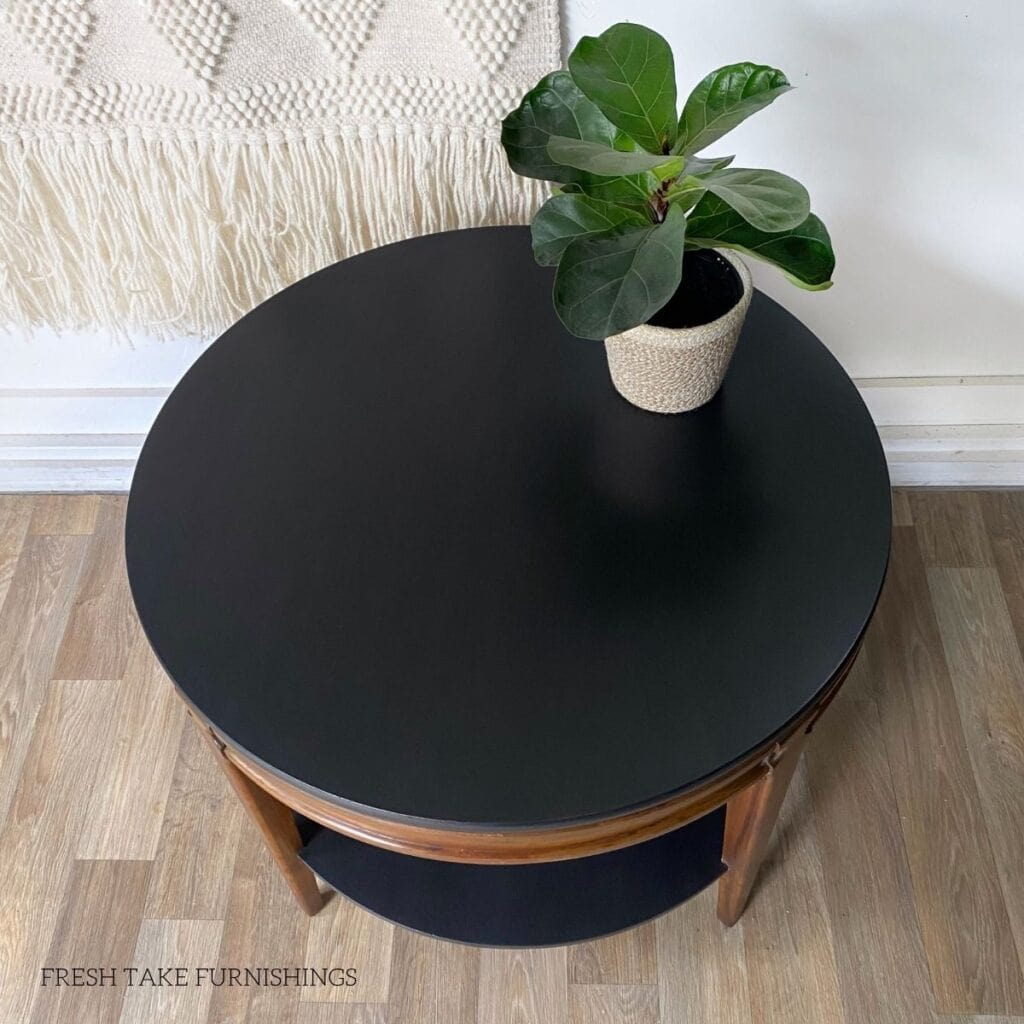
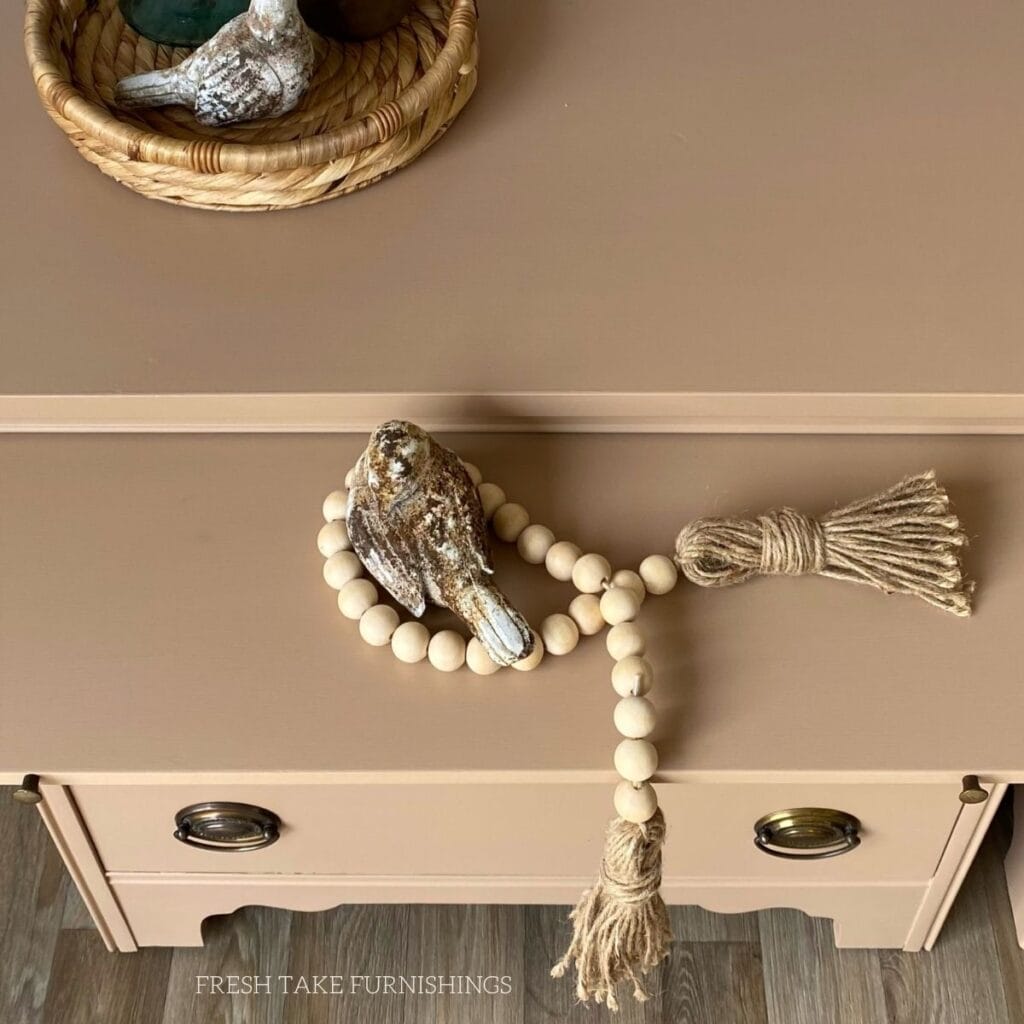
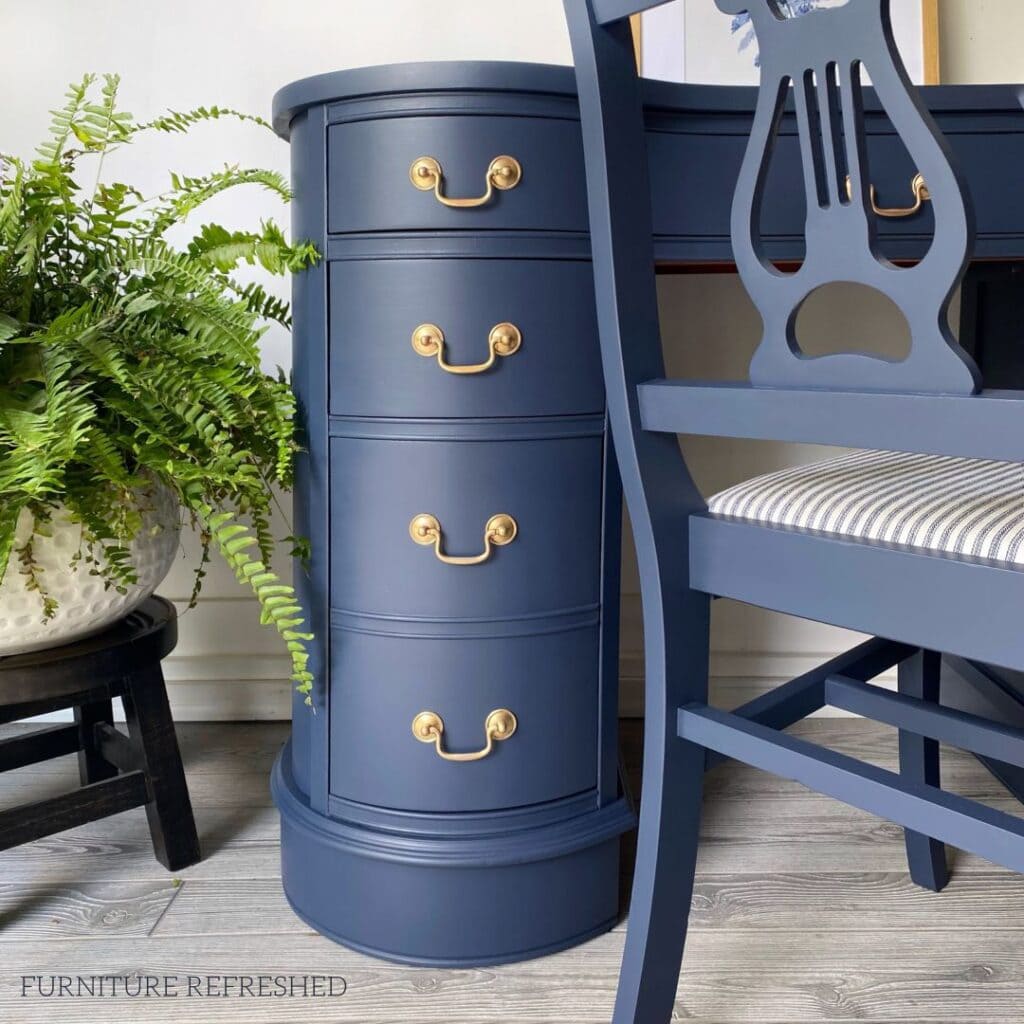
All the furniture photos shared in this post are examples of pieces hand-painted by me.
What Causes Brushstrokes?
If you’ve used a brush to paint furniture before you likely have encountered the dreaded brushstrokes (also known as brush marks). I know I have! In order to avoid brush strokes in your painted furniture finish, it is helpful to know what causes them. Here are a few common culprits:
- Some paints don’t level well and aren’t great candidates for hand painting. Look for a high-quality self-leveling paint. My personal favorite is Melange Paints (here’s a Melange Paints review sharing exactly why), which I’ve been using for years after trying many! And if you want to do a deeper dive, check out this article comparing four all-in-one furniture paints.
- Overworking your paint. Overworking is when you brush to many times and the paint starts to dry while you are still laying it down. If you start to feel your brush pull in the paint, you are overworking it.
- Painting in hot weather. Painting furniture in hot weather can cause your paint to dry too fast and result in overworking or not giving your paint time to level.
- Using the wrong brush. Not all brushes are created equal, and some simply leave brushstrokes behind.
Tips For Avoiding Brushstrokes
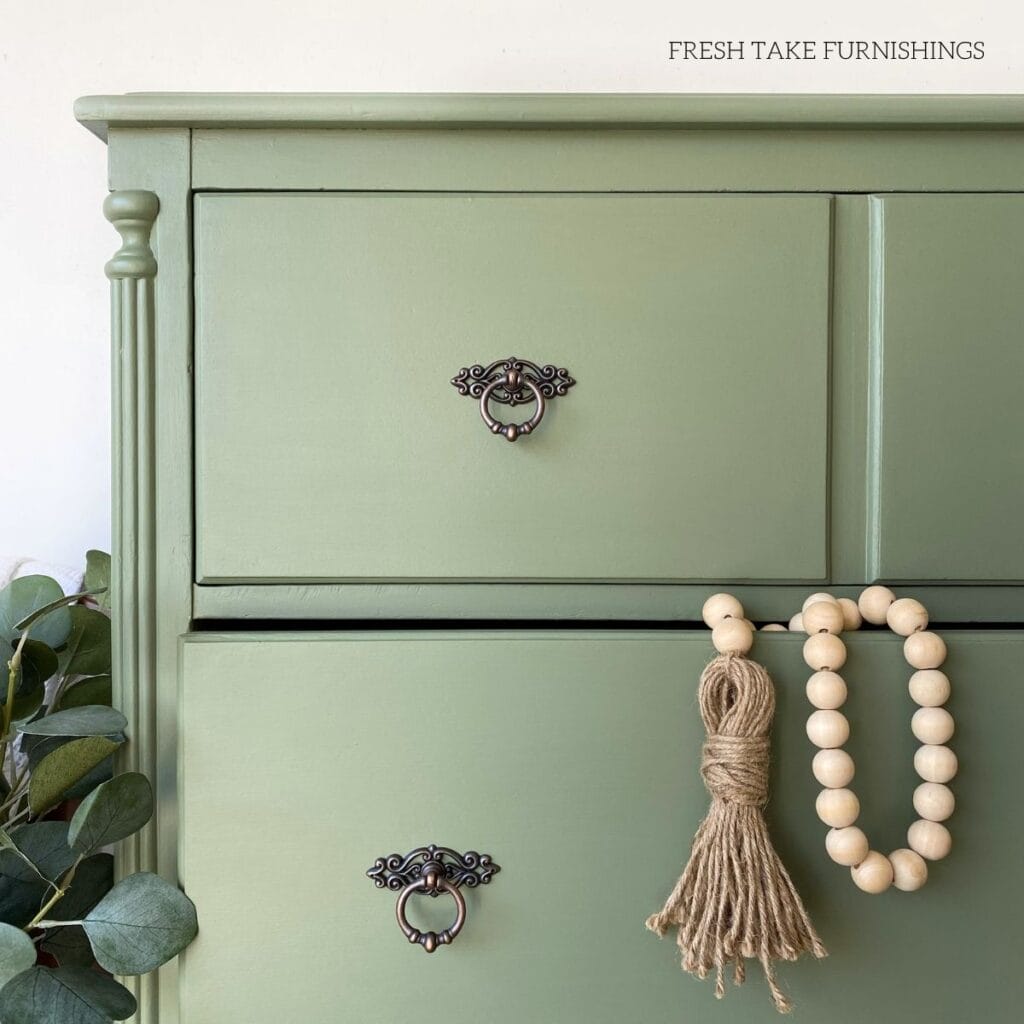
Okay, so now that you know what causes them, here are some of my tried-and-true tips for avoiding them altogether!
Tip 1: Focus On Your Prep Work
Your final finish is only as good as your prep work! This is one of the most important concepts when painting furniture. You can’t cover up imperfections with paint. A self-leveling paint (which is what we want for a smooth finish) will show everything! So be sure to take care of those scratches, cracks, old brush marks, drips, or chips by doing the proper furniture painting prep work. This includes cleaning and scuff-sanding, doing all necessary furniture repairs, and priming when necessary.
Tip 2: Use a High-Quality Paint and Brush
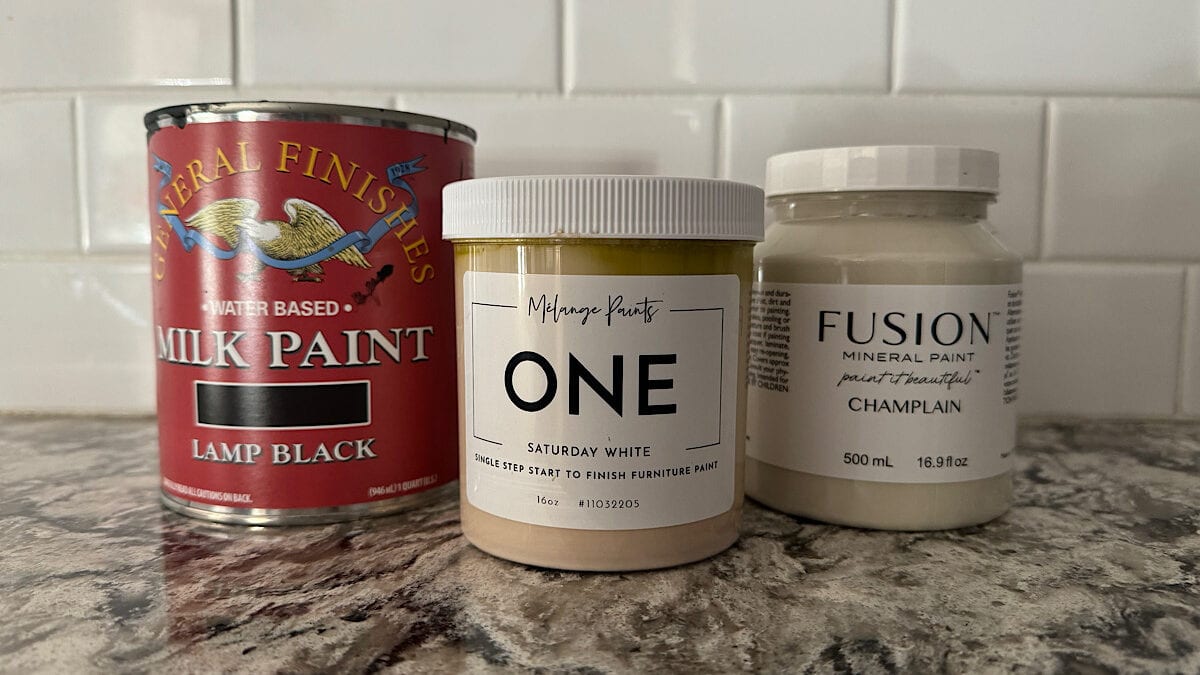
Choosing the right paint ultimately comes down to personal preference. That said, I find paints that are self-leveling are best at giving you a smooth finish. I recommend using furniture paint, especially if you are starting out. Cabinetry and enamel-based paints are very durable, but I find they don’t brush on as well and work better with a sprayer. That’s not to say you can’t brush them on, but they do take a bit more practice to get a smooth, brush-stroke-free finish.
My favorite paint brand to use is Melange Paints, and I use them for about 90% of my projects. You can read my review of Melange Paints ONE furniture paint to learn more about why! They have an amazing color palette and their paint levels beautifully. Other self-leveling paints that I like to use are Fusion Mineral Paint and General Finishes Milk Paint. Try a few and see what you like best.
A high-quality synthetic brush is also a must-have. My favorite is a 1.5-inch oval brush that is sold by several paint companies. Melange sells one I love (I’ll often throw one into my cart when placing a paint order), and you can also get something very similar by County Chic on Amazon. I like them because they don’t leave many brush strokes and are relatively inexpensive. Zibra also has some great specialty brushes that are high quality and inexpensive.
I also recommend getting your brush damp before use. Simply wet it and then remove the excess water with a paper towel or cloth.
Should I Use A Paint roller?
I see this advice out there a lot, and I don’t think it is necessary! I have used a roller a number of times, and while it can be quicker, it ends up being more supplies that you need to purchase and clean. You can’t use a roller for every surface, so you end up needing a brush as well. My results are just as good when brushing as they are when using a roller. I’ll only break out my roller to save time when painting a very large surface.
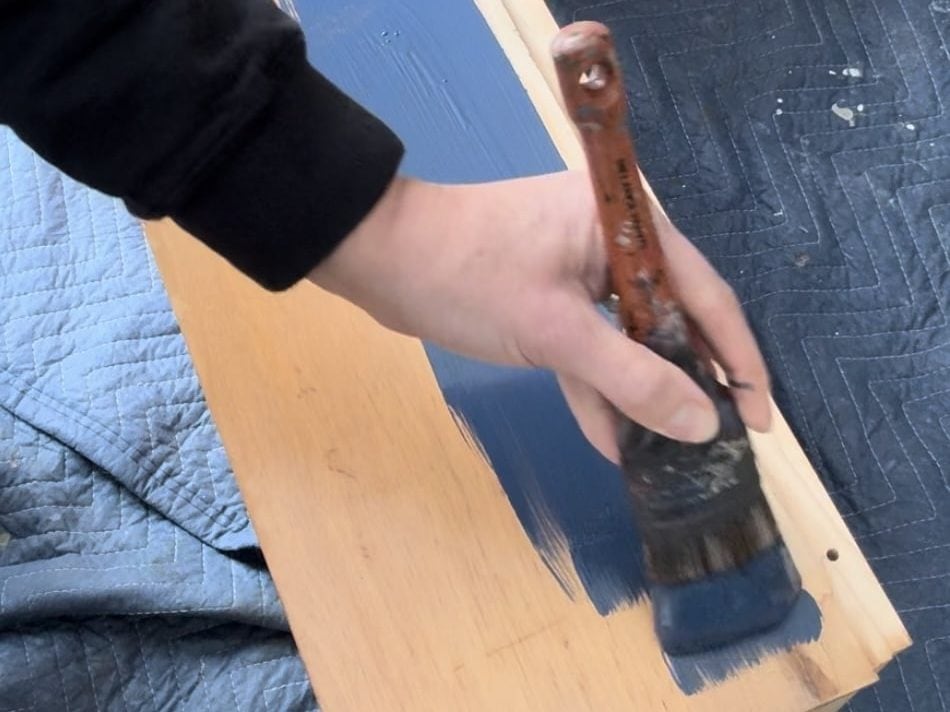
Tip 3: Use Long Strokes In The Direction Of The Wood Grain
Would you like to save this?
The key is to have thin coats, but don’t “stretch” the paint. Too much paint will cause sagging and drip marks. Too little will dry before you’re able to apply it to the area you’re working on. I generally will paint across in shorter strokes, reapplying paint as necessary to my brush. And then follow with one long, light-handed stroke to even everything out.
Tip 4: Don’t Overwork Your Paint
This is an important thing to keep in mind. Once you lay your paint down, you want to make sure you let it do its thing. It can be so tempting to go over it with your brush one last time. I am guilty of this, but I’ve gotten better with practice. If the paint is starting to dry, you will start to feel your brush pull, and that leaves marks in your finish. Better to leave it slightly imperfect, and sand out any imperfections before your next coat.
Higher quality paints furniture paints (see tip 2) will have longer work times and level better, this is why I love Melange Paints so much! Painting in hot and/or dry weather will also affect work time.
Tip 5: Try a Mister Bottle
This is a great way to avoid overworking your paint, as described above. Sometimes, especially in dry or warm conditions, there just isn’t enough time to get your paint laid down before it starts to dry. When that happens, I will use a mister bottle and lightly mist the surface you are painting before laying down the paint. This increases your work time and will help the paint level better before drying. It’s also a great thing to do on your final coat for a smooth, extra leveled finish.
Tip 6: Thin The Paint
Thinning your paint a bit is another great way to extend dry time a bit and avoid overworking. Assuming you are using a water-based paint, you can thin it with water or a paint additive like Floetrol. I start by adding just a splash and testing it out, and then adding more as needed, but never more than 10%. Use a separate container for mixing to keep your original paint fresh.
Tip 7: Sand Lightly Between Coats
While all of the above tips will help you get a smooth finish, a very light sanding in between coats will get rid of any texture or imperfections. I recommend using a high-grit sanding sponge and lightly sanding the surface by hand. My favorite sanding pads are the RAD pads by Surfprep, but you can also find something similar at your local hardware or big-box store, or on Amazon. Just be sure your grit is 300 or higher. I do sand the final coat when I am planning to topcoat my painted furniture. If I’m not top coating, I don’t sand the final coat.
Hand Painting Furniture With A Brush FAQs
When painting furniture, I recommend using a self-leveling acrylic paint designed specifically for furniture. My favorites are Melange Paints, Fusion Mineral Paint, and General Finishes Milk Paint. If you are looking for a smooth finish, I do not recommend chalk-style furniture paints, as they are thick and show brushstrokes.
If using a water-based paint, you can simply thin it with a bit of water, or use a additive like Floetrol. This increases dry time and workability and helps the paint to fully level before it dries.
I love using a synthetic oval 1.5-inch brush for painting furniture. Many furniture painting companies sell this style and Zibra also makes quality synthetic brushes.
It comes down to personal preference, but using a brush is my favorite way to paint furniture.
If you are just getting started, I recommend using a brush. It is the easiest and most cost-effective way to learn.
Summary
Like everything, hand-painted furniture takes some practice. But the learning curve is no different than learning how to spray paint. And it doesn’t require a fancy space or a big investment to get started. Keep in mind that different paints will apply differently. Try a few and see what you like working with best. As always, please let me know if you have any questions!
New to furniture painting?
Get my FREE Beginner’s Guide to Painting Furniture! This guide walks through the steps of a furniture painting makeover and includes a downloadable project planner and supply checklist.