

Sealing Painted Furniture: Types of Top Coats and How to Use Them
This post may contain affiliate links, meaning I make a small commission on qualifying purchases.

One of the most important parts of painting furniture is the last step, applying a protective top coat. And there are so many options out there, so how do you know what to use? After painting furniture professionally for years, I’ve tested just about every furniture sealer you can buy. Some are great, some are terrible (they can be streaky, hard to work with, or yellow your finish). This guide on sealing painted furniture will describe the different types of sealers, how to use them, and why General Finishes High Performance Top Coat is the sealer I reach for again and again!
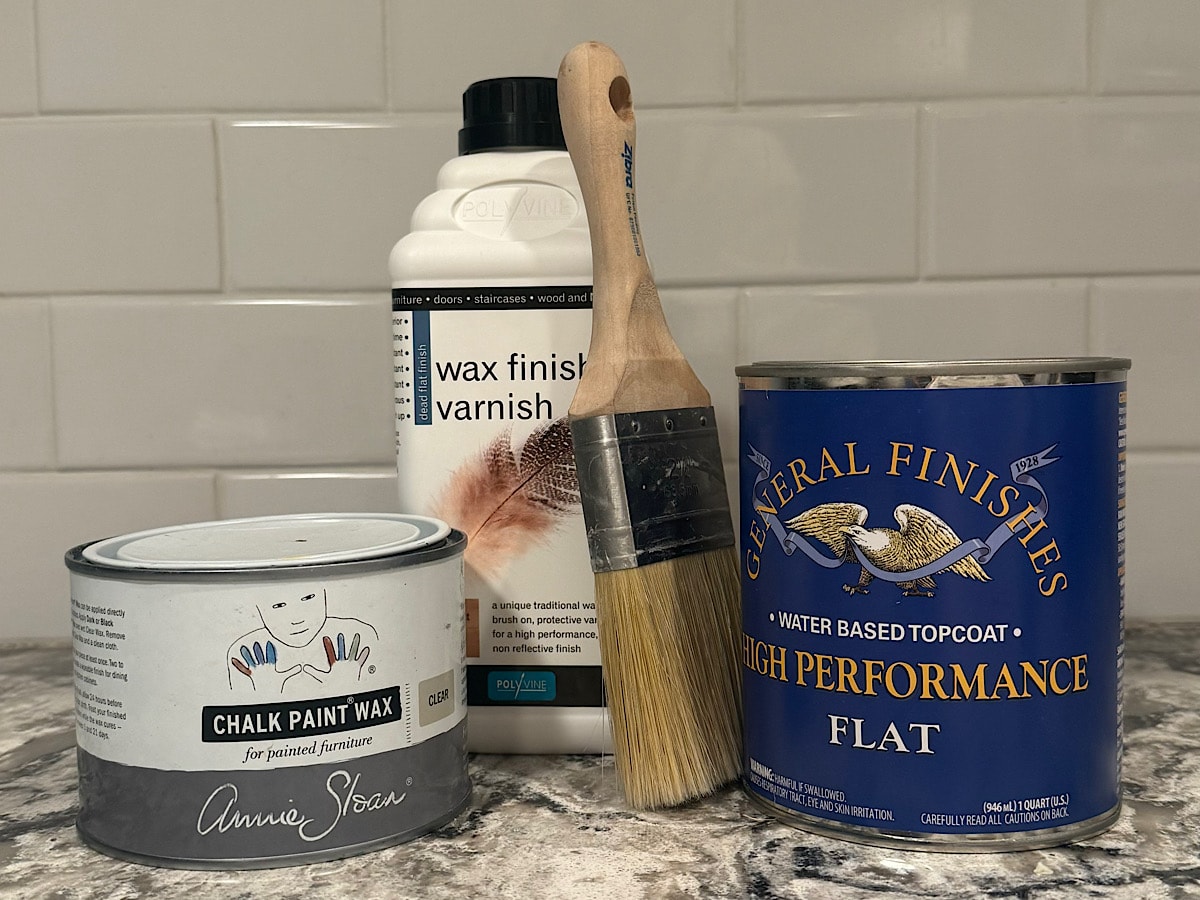
There are so many things to think about when you are learning how to paint furniture. But this last step, sealing you paint, is arguably the most important! All of your hard work will be for nothing if the finish isn’t protected. There are three main types of top coats used to seal furniture: waxes, water-based top coats, and oil-based top coats. Each has it’s pluses and minuses, so keep reading to get my thoughts on all of them!
Key Takeaways: Sealing Painted Furniture
- Applying a protective top coat is essential when sealing painted furniture to protect your hard work.
- There are three main types of top coats: waxes, water-based top coats, and oil-based top coats, each with advantages and disadvantages.
- Water-based top coats, like General Finishes High Performance Topcoat, provide durability without altering paint color and are preferred for most projects.
- Use wax if you favor a traditional finish, but be mindful of its long cure time and need for re-application.
- Always seal chalk paint, milk paint, and latex wall paints to ensure protection, especially for high-traffic surfaces.
Summarize & Save This Content
Furniture Wax
I will start by saying I love using wax to seal painted furniture, and it’s what I used when I first started painting furniture. My favorite is Annie Sloan wax. While it can be a bit of a workout to apply and wipe back, the finish is truly amazing, especially when paired with chalk paint. It enhances the color and depth of the paint, and it is very durable once it has fully cured.
I have several pieces in my own home that were sealed with Annie Sloan wax and still look great, 10+ years later! However, there are two reasons why I don’t use wax very often anymore:
- It does have a long cure time and can be fragile and prone to chipping until it has cured.
- More importantly, it should be re-applied every few years to maintain its protective qualities.
These reasons aren’t a big deal when you are painting a piece for your own home, but more difficult when painting pieces professionally. Who wants to wait a full 30 days before selling a piece or asking customers to re-wax their purchases?
If you want to give furniture wax a try, it is best suited for paints that do not have a top coat in them already. They work best when they are able to soak into the porous finish of a chalk paint, mineral-based paint, or milk paint. They won’t work well for all-in-one furniture paints.
How To Apply Wax
Annie Sloan has a great step-by-step guide on how to apply her wax to chalk paint. Learn from the master herself!
Water-Based Top Coats
I think water-based sealers or top coats are the best option for most painted furniture projects. When applied they will add a layer of protection without altering the color of the paint (no yellowing!). They are also less toxic and have easier cleanup when compared to their oil-based counterparts. They cure fairly quickly and are ready to use sooner than wax or oil-based products.
My Advice On “yellowing”
While water-based top coats do not yellow on their own, you will sometimes get some yellow or pink hues visible in your finish after applying the top coat. These are tannins from the wood (particularly mahogany) bleeding through the surface.
This is a primer issue, not a topcoat issue! So my advice? The best way to prevent yellowing when using water based products is priming your furniture properly before painting. It is the best way to prevent this from happening.
My Favorite Water-Based Top Coats
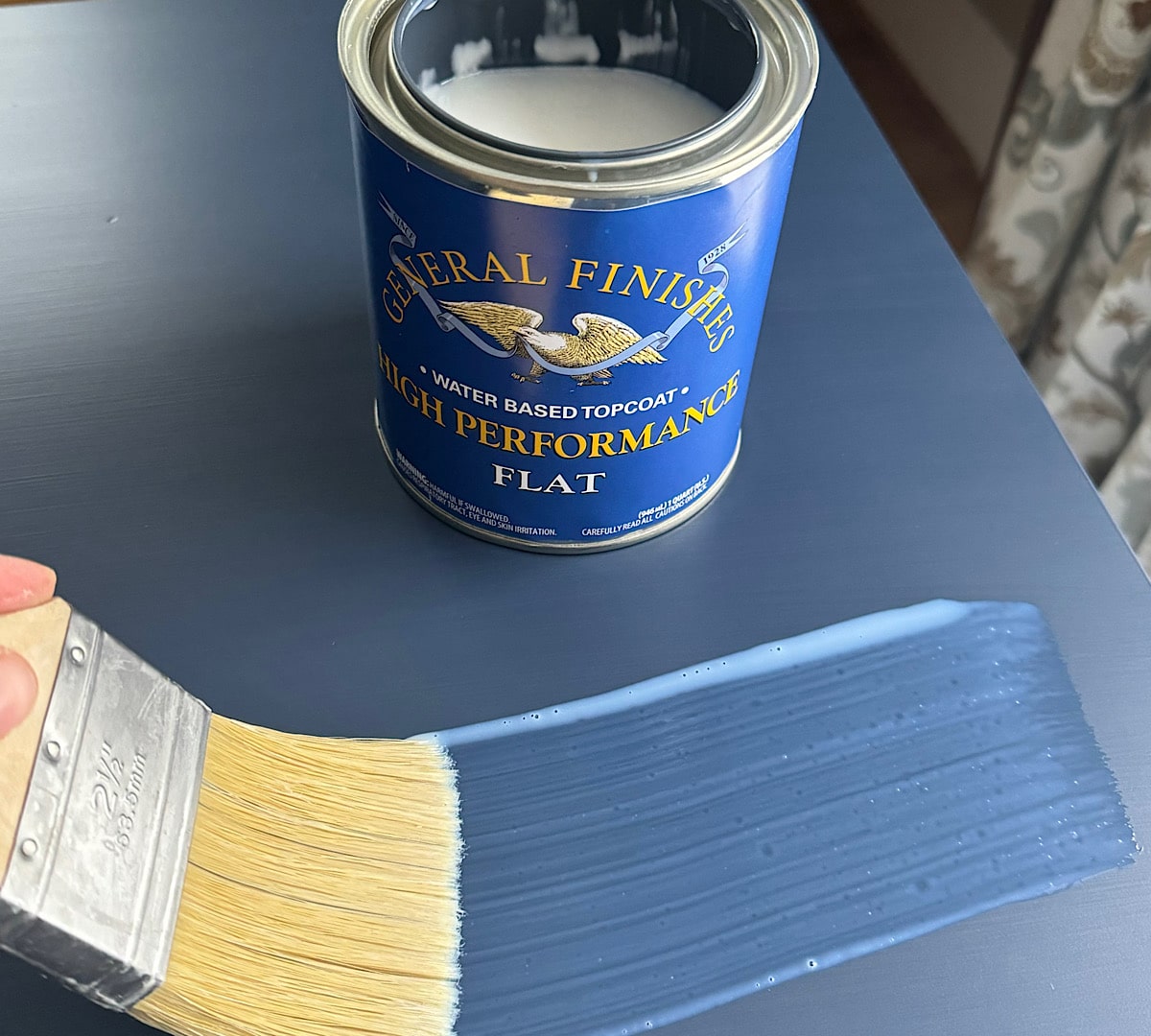
I’ve used many water-based topcoats (there are lots of them!) and my favorite is General Finishes High Performance Topcoat in Flat. I find it gives the most durable and reliable finish, it tends not to be streaky or cloudy. This is what I reach for nine times out of ten, and I’ve used it on hundreds of pieces.
Another product I’ve had success using is Polyvine Wax Finish Varnish. This is a bit easier to use (it has a longer work time and levels a bit better) than the General Finishes Top Coat. And it is nearly as durable and is a great option if you’re starting out. It is a much thicker consistency, but it dries level and clear, I promise!
Author’s Note
In my opinion, General Finishes High Performance Top Coat is the best sealer for painted furniture. If you are having trouble applying it, I recommend using Polyvine Wax Finish Varnish to start. Then, go back to General Finishes when you have more experience, it gets easier with practice!
My least favorite water-based topcoat? Polycrylic! This one is super popular because it is easy to find in big box stores, but I find it hard to apply and don’t like the finish. The work time is short, meaning it can start drying while you are still trying to lay it down. And even if you do get it to lay down well, its prone to streaks and cloudiness (especially noticeable on dark colors), and has a plastic-like feel to it.
How To Apply Water-Based Top Coat
Personally, I prefer using a brush to apply my topcoat. I’ve tried so many pads, sponges, rollers, etc…, but I’ve found I have the most control and get the best finish with the Zibra topcoat brush. Applying water-based topcoats takes practice, so please be patient with yourself! And I’ve included some tips below that should help you get a great result.
My Tips for Applying Water-based Topcoat
1. Using a brush, lay down the top coat in the direction of the grain, across the entire length of the section. I start in the middle and brush out to each edge, then do one long stroke across. Continue to adding these long brushed areas to the section, overlapping slightly, until complete.
2. Do not overwork the product (overbrush it). If it starts to dry while applying you will get brush strokes, so just lay it down and let it level. If you find your top coat is drying too quickly, add an extender. This increases work time.
3. Do not shake your top coat, this will create bubbles that can affect your finish. Stir your topcoat to mix before use.
3. Minimize cloudiness by applying thin coats. More thin coats is better than fewer thick coats. Add a drop of your paint color to your sealer also helps.
4. Increase durability and minimize cloudiness by starting with gloss sheen and just do the final coat in the sheen of your choice. The flatter the finish the more likely cloudiness will occur (especially true over darker colors).
Would you like to save this?
Oil-Based Top Coats
The last category of sealers are oil-based top coats. These tend to take longer to dry and cure, but are very durable. There are several different sealers that are oil-based, some of which are great for using over painted furniture.
Hemp Oil
The easiest way to seal painted furniture is with hemp oil, hands down! It is also a great non-toxic option, and is often food safe (be sure to check the manufacturers details on this). To use, simply wipe it on, let it sit for several hours, and then wipe back the excess with a shop towel or rag. Like wax, it needs to be re-applied every few years, and doesn’t work well over paints that aren’t porous. It’s a great option when using milk paint or chalk paint.
Furniture Butter
I would describe Furniture Butter as a mix between wax and help oil. It contains both waxes and oils so you get the durability of wax with the ease of application of hemp oil. Similar to hemp oil, you brush it on, let it sit overnight and then wipe back any excess. Another great option over porous paints like milk paint and chalk paint. It is my top choice when using milk paint!
Author’s Note
Furniture Butter is my top choice for Milk Paint and other porous chalk or mineral paints.
Other Oil Based Sealers
I don’t recommend using other oil-based sealers (like polyurethane, lacquer, or shellac) on a painted finish. These types of sealers amber over time and this will affect your color, in particular lighter colors, by yellowing. They are also more toxic (need more ventilation and personal protection) and are more challenging to clean up. These oil-based sealers are best saved for when you are staining furniture, where the oils in them will enhance the look of the wood grain.
When to Use a Top Coat
Certain paints need to be top-coated as they don’t have any (or enough) protection in them. The paints that ALWAYS need to be top-coated include chalk paint, milk paint, and latex wall paints. Paint washed furniture always needs to be sealed. In addition, if a piece will get a lot of use or has a high traffic surface (like tables) adding a top coat is a good idea.
What About Paints That Include a Top Coat?
I am asked this question all the time. Especially because my favorite paint (ONE by Melange Paints) is considered an all-in-one paint with topcoat included. My advice is – if you are painting a piece for yourself and it’s not being used in a high-traffic area, you can probably get away without sealing. I have plenty of pieces in my own home that I have not top-coated and they are holding up great.
However, if you are painting furniture to sell, I recommend sealing your piece and giving it that added amount of protection. I also think adding top coat makes the paint feel smoother to the touch. In the long run, I think it will benefit your business to sell the highest quality, most durable finish you can create.
A Note On Cabinetry Paints
Some paints are alkyd or enamel-based, such as cabinetry paints. These should NOT be top coated. In fact, adding an extra layer of sealer can affect (in a bad way) their adhesion and performance.
Sealing Painted Furniture FAQs
The short answer, it depends!. Chalk paint, regular latex/acrylic paint, mineral/clay paint, and milk paint all need to be sealed. You do not need to seal all-in-one furniture paints, but can for extra durability. You SHOULD NOT seal alkyd or enamel paints, as it can affect their performance.
My favorite protective sealer for painted furniture are water-based top coats. After trying many different water-based top coats, the one I always reach for is General Finishes High Performance Top Coat. And I stay away from Polycrylic completely.
Yes, a water-based polyurethane is a great option for sealing painted furniture. I do not recommend using an oil-based polyurethane.
If you are painting a piece for yourself and it’s not being used in a high-traffic area, you can probably get away without sealing. However, I always seal dining tables and high-traffic surfaces and I usually seal pieces that I am selling professionally.
No, these types of paint should NOT be top coated. In fact, adding an extra layer of sealer can negatively affect their adhesion and performance.
No, oil-based paints do not need to be sealed. And I don’t even use oil based paints for furniture. There are so many great water based products out there with easier cleanup and less toxicity.
Summary
I hope this helps to break down when and how to seal painted furniture. Like most things when painting furniture, there is no one-size-fits-all approach and you need to do what works best in your situation. I’m always happy to try and answer any of your questions along the way. If you have any questions about specific paints and/or sealers, please ask and I can help you decide whether you should or should not seal them, and if so, with what!
New to furniture painting?
Get my FREE Beginner’s Guide to Painting Furniture! This guide walks through the steps of a furniture painting makeover and includes a downloadable project planner and supply checklist.
I have a question about top. coats. I did all the previous steps and am down to the top coat. I used outdoor behr paint. it will be outside in the az heat but not the sun. top coat or not?
thank you for the tutorial it eased my mind.
Jill
I would topcoat! I’m assuming you mean an exterior house/trim paint. While these paints are great for withstanding weather, they aren’t really made for the wear and tear a piece of furniture gets so would recommend adding a layer of protection!