

Tips for Painting Mahogany Furniture
This post may contain affiliate links, meaning I make a small commission on qualifying purchases.
Painting mahogany furniture can be a challenge! If you’ve ever painted a piece of furniture and noticed some pink or brown discoloration bleeding through your paint, you know what I’m talking about. It is the worst. But the good news? By following these tips for painting mahogany furniture, you can get a beautiful and long lasting finish! And if you’re new to furniture painting, be sure to check out my complete guide on how to paint wood furniture for a step-by-step overview of the entire process.
Key Takeaways: Painting Mahogany Furniture Tips
- Understanding bleed through is crucial; tannins in mahogany can bleed into paint, causing discoloration.
- Use a stain-blocking primer to create a barrier against tannins; shellac or water-based primers work well.
- Avoid oversanding to preserve the existing finish, which can help reduce bleed through.
- Consider using dark paint colors to mask any potential bleed through on mahogany furniture.
- With proper preparation and patience, successfully painting mahogany furniture is achievable, even in lighter colors.
Summarize & Save This Content
Should You Paint Mahogany Furniture?
There are a few things to think about before you just grab that brush! I always recommend doing a little research first to make sure you mahogany furniture isn’t a valuable antique or a rare solid wood piece that would be better restored than painted. Some older pieces have beautiful wood grain and craftsmanship that may be worth preserving.
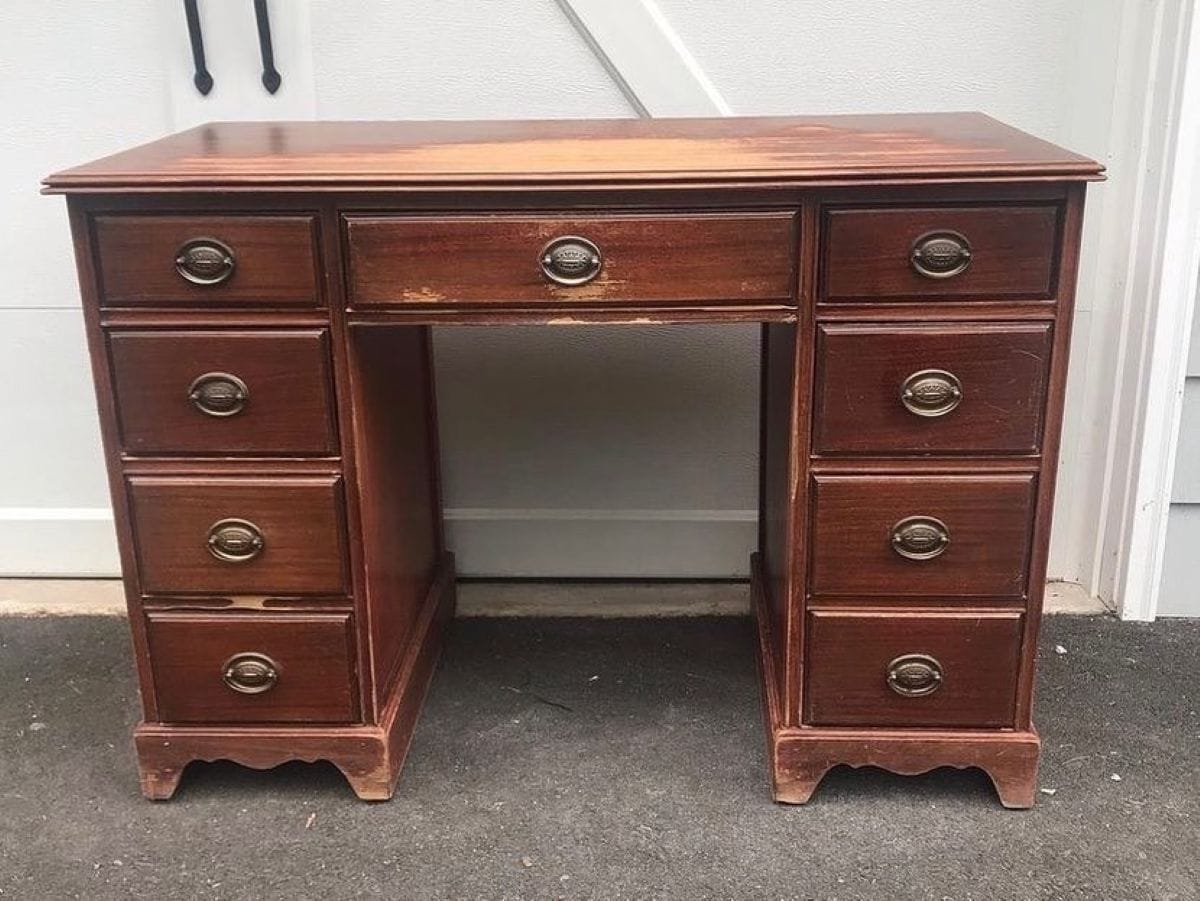
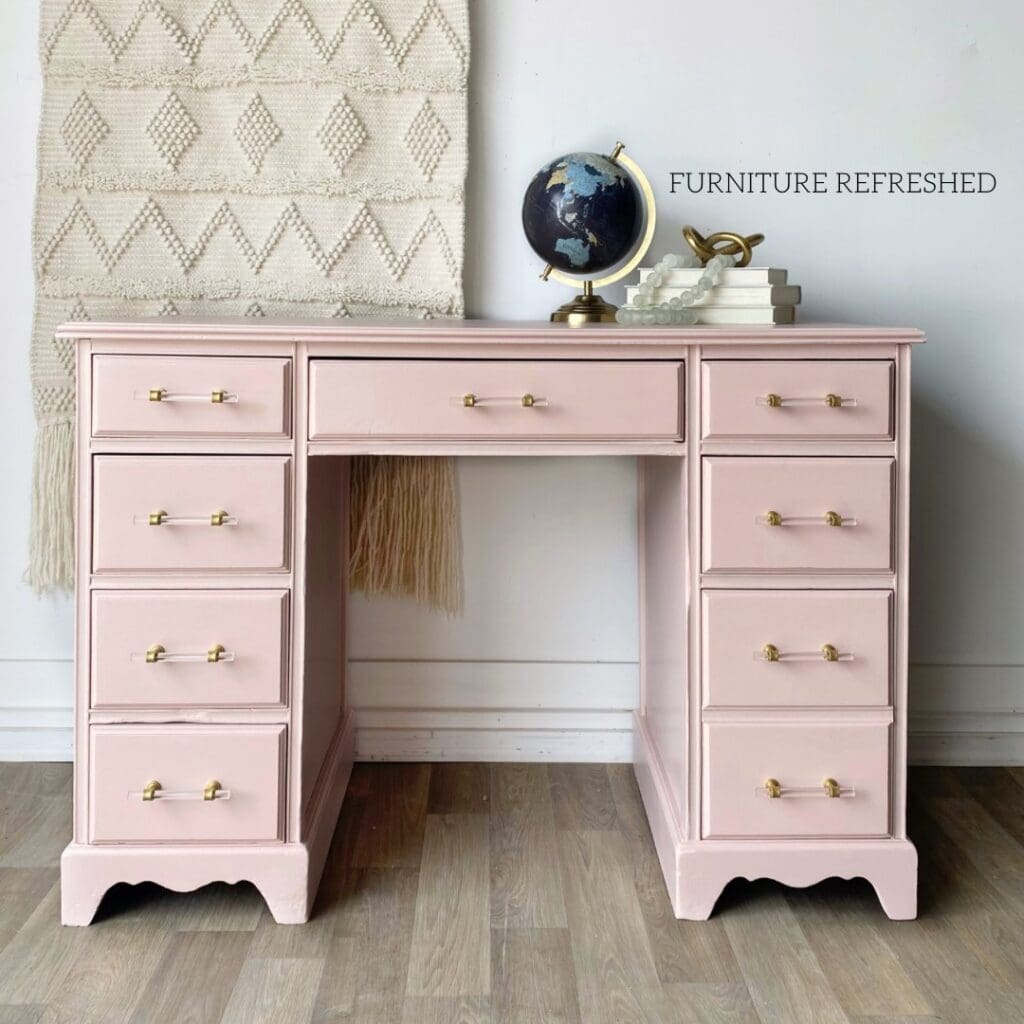
That said, many mahogany pieces are not particularly rare. Vintage mass-produced veneer furniture, like this desk, are perfectly fine to paint. The original finish was heavily worn, and paint gave it an entirely new life.
At the end of the day, furniture is meant to be lived with and enjoyed. My goal is always to create a finish that gives an older piece a fresh start and keeps it out of the landfill (and from being replaced with a cheaper fast furniture alternative).
Understanding Bleed Through
It helps to understand exactly what bleed through is. Simply put, wood has tannins that are drawn to the surface by water-based products. Tannins are naturally occurring chemicals in the wood that can be reactivated when wood gets wet. To protect your final finish from these tannins, you need to create a barrier and seal them in.
Sometimes it will happen almost immediately, and sometimes it takes several days or even weeks. It can happen after the painting step, but it often happens after you applied your top coat (you can learn more about sealing painted furniture here).
Walnut and pine are other tannin-rich woods, although you can see bleed through in other species as well. Have you ever seen the knots of a pine board turn yellow through white paint? Those are the tannins (in the sap) of those knots. So keep bleed through in mind when painting pine furniture as well. Regardless of the type of wood you have, following these tips will help with any bleed through issues you may have.
Author’s Note
Before getting started, it’s important that you are familiar with the steps for painting furniture. Most importantly, make sure you have cleaned your furniture and scuff sanded before continuing with the tips below.
Tip 1: Use a Stain-Blocking Primer
This is the most important thing to do when painting mahogany furniture! If you don’t use the right primer and don’t use it correctly, you are setting yourself up for the dreaded bleed through in your finish coat. There is nothing worse than finishing a piece only to notice some bleed through. I’ve been there, more times than I’d like to admit! And I promise you will wish you had taken the extra time in your prep work and priming.
I have an entire post on priming furniture, but essentially, when you are worried about bleed through you need to use a stain-blocking primer. This can be a shellac-based primer like BIN, or a water-based stain-blocking primer. I personally prefer Melange’s stain-blocking primer. It cleans up easily and can be used indoors, but I’ve also used BIN plenty of times with great success. The least effective one that I’ve tried is KILZ.
You can also use clear dewaxed shellac as a stain blocking primer. It is a great option when you are painting a darker color and want to avoid a white primer. Shellac can also be used to touch up small spots of bleed through that might pop out in your final paint finish. Simply apply over the affected area, let dry completely, and then paint over. Shellac has many uses and is one of my recommended supplies to always have on hand as a furniture refinisher.
Would you like to save this?
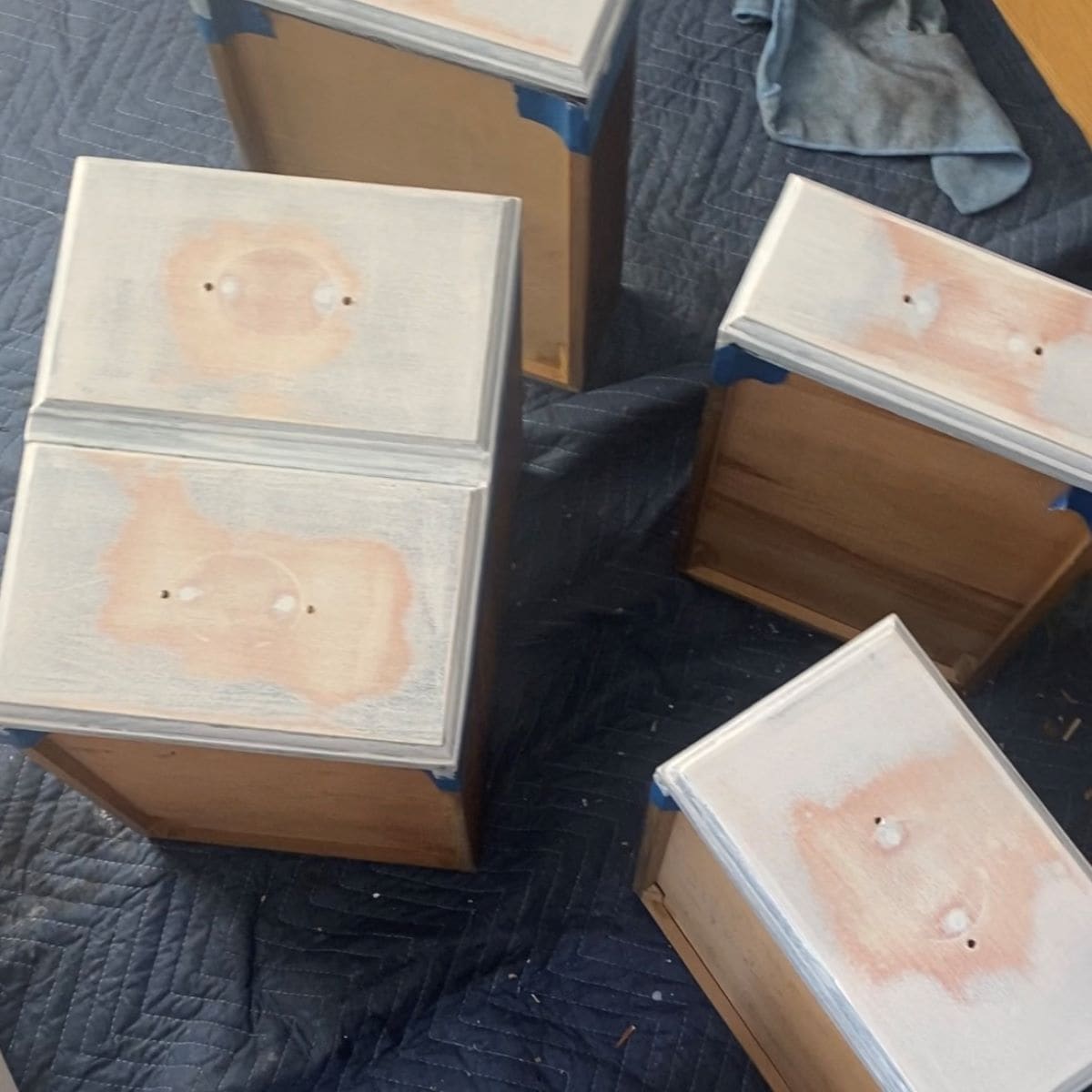
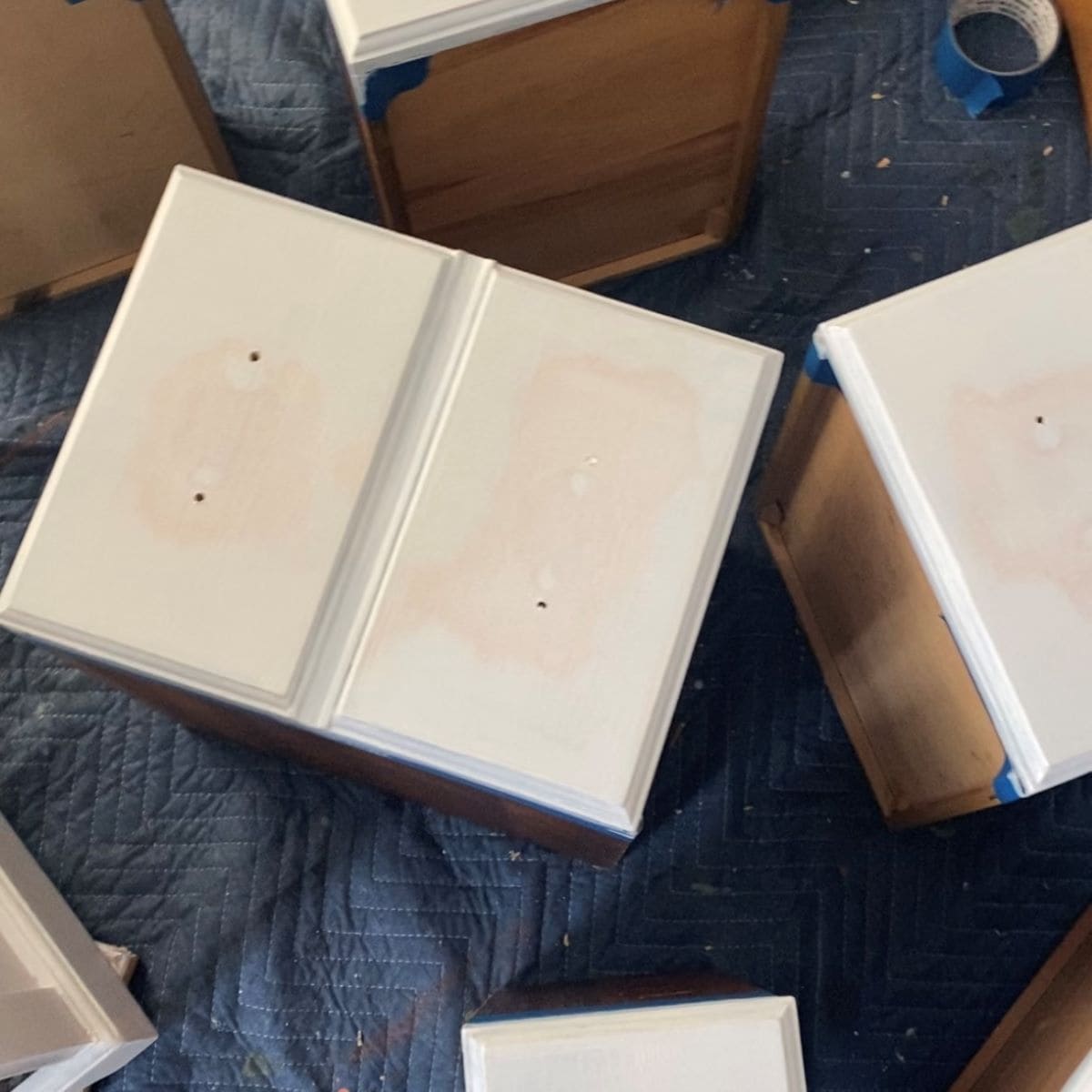
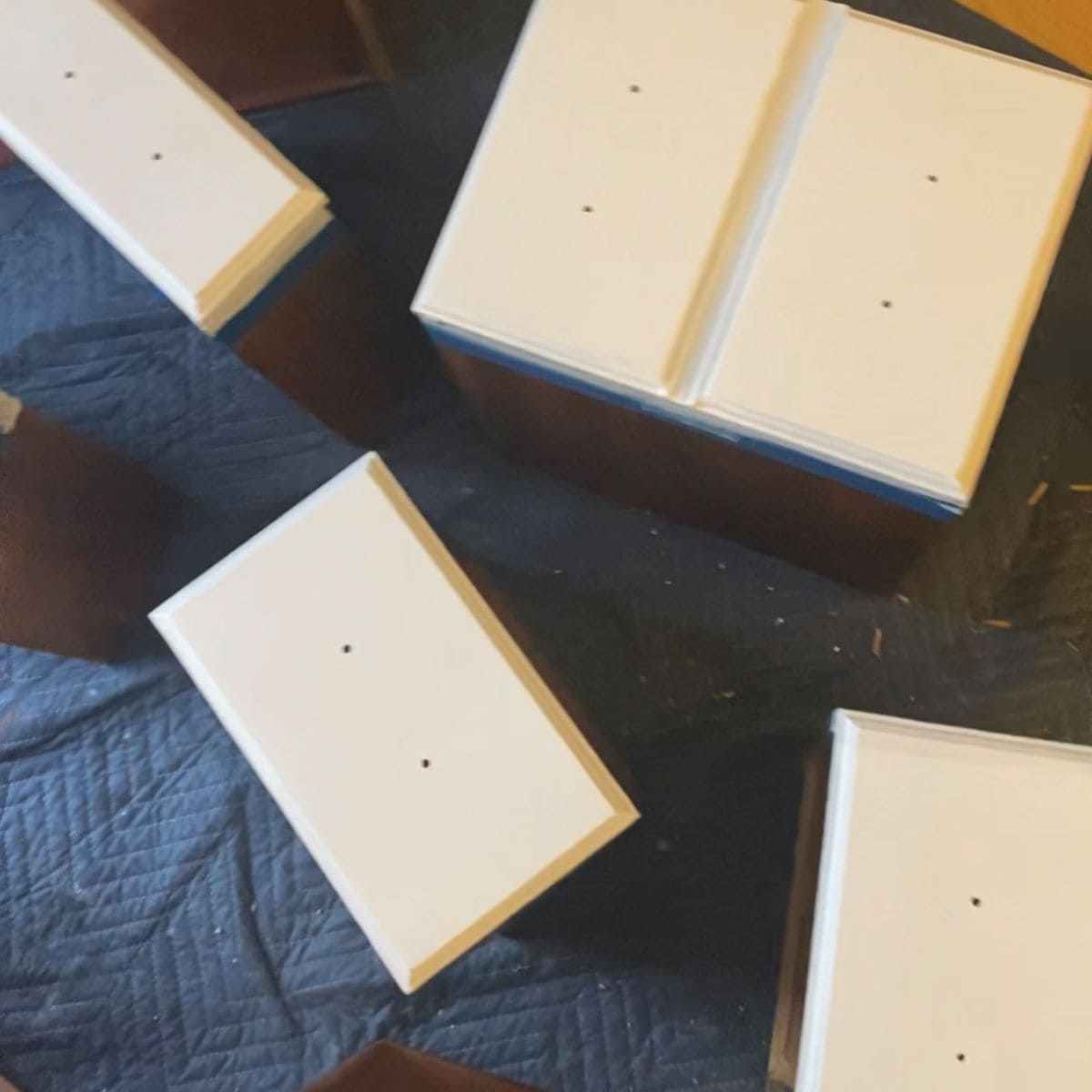
When using a stain-blocking primer, it may take several coats to seal in the tannins. This particular desk took three coats of primer. After applying, I also like to wait overnight and let the primer cure fully before moving on to paint. This is important! So many times people will go immediately from primer to paint and have issues. I used to do this, but I’ve found waiting and letting the primer do its thing saves me headaches in the end. I will also sand lightly between coats to smooth out the finish, but you don’t want to sand too much or you will break the seal you are trying so hard to create!
Author’s Note
I can’t stress enough that using a stain blocking primer is most important thing you can do when painting mahogany furniture! If you walk away from this article with nothing else, remember this! And I’ve found that having the primer cure overnight dramatically increases it’s success – it pays to be patient!
Tip 2: Don’t Oversand
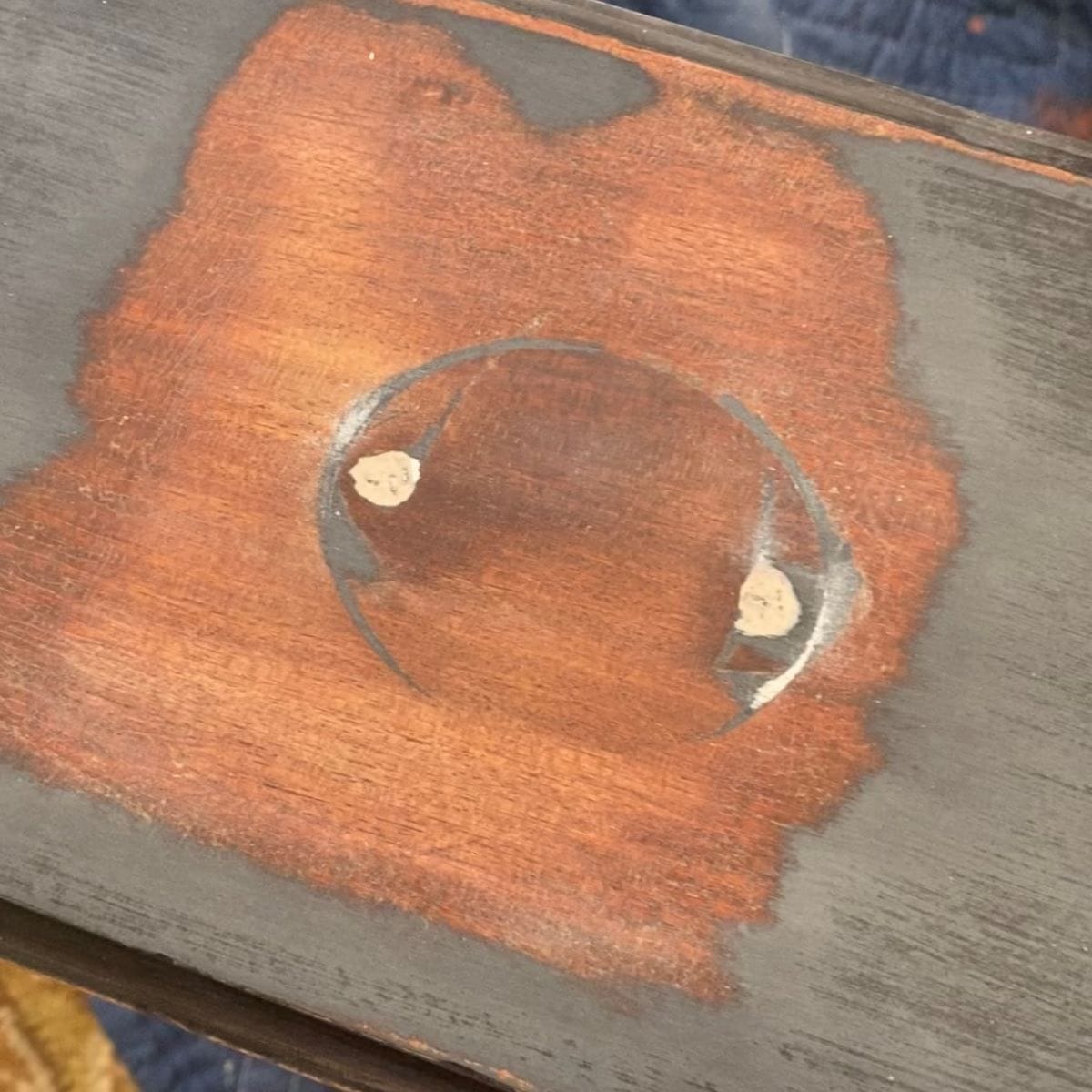
Another way to minimize bleedthrough when painting mahogany is to try and keep as much of the original finish intact. You do need to scuff sand the piece to help with adhesion. But if the existing finish is in good shape you can try to simply scuff up the surface and leave the existing finish barrier there to help.
You can see in this photo the areas around the handles where I sanded down to raw wood. I was replacing the existing hardware with and removed all of the finish sanding the filler smooth. This is why the bleed though was so bad on the drawer fronts in this desk makeover.
Tip 3: Choose a Dark Paint Color
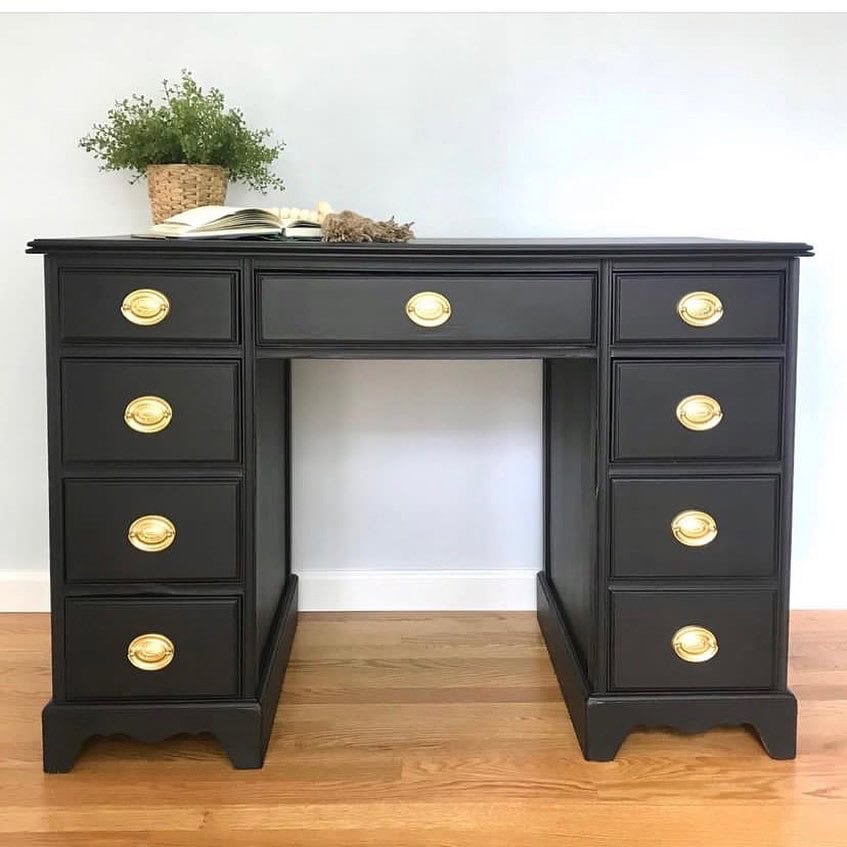
If you are still nervous about a piece of mahogany furniture bleeding through, then consider painting it in a dark color. This masks the bleed though and you won’t see it in your final product.
While this helps, I’ve still had times with a dark color (even black) where you can see just a bit of discoloration at certain angles. So this is why I always recommend using a stain blocking primer.
Painting Mahogany FAQs
Yes, painting is a great way to update an old or tired piece of mahogany furniture. Just be sure to use a stain blocking primer to block any bleed through.
It’s important to do your research to ensure you are not painting over a valuable antique that would be better suited for restoration. That said, there are many pieces of mass produced furniture with mahogany veneer that make great candidates for a painted furniture makeover!
No, as long as you prepare the piece properly and use a quality stain blocking primer.
Mahogany wood has tannins, which are naturally occurring chemicals in the wood that can be reactivated when wood gets wet. Using water based products will “pull” these tannins and make them visible in your final finish.
You should always scuff sand, or lightly sand, a piece of furniture before painting to ensure good paint adhesion. However, over sanding may make your bleed through worse because the old finish acts a barrier for tannin bleed through. I will always do an extra coat of stain blocking primer over areas of raw wood before painting.
Shellac is a great sealer to prevent bleed through. I recommend using BIN shellac based primer or plain dewaxed shellac as a primer. Melange Paints stain blocking water based primer also works well, and is what I use most often because of it’s easy cleanup. I have had the least amount of success using KILZ.
The good news is that bleed through is always fixable, you just need to create a better seal. I recommend using clear dewaxed shellac on the affected area and then repainting.
Summary
While painting mahogany furniture can be a bit of a challenge, it is totally doable with the right prep work. With a stain blocking primer and some patience, you can seal in the tannins that cause the dreaded bleed though. If the piece has already been heavily sanded down to raw wood, I automatically expect more bleed through and plan for additional primer coats from the beginning. And remember, if you do get bleed through, it isn’t the end of the world! Even though it’s frustrating, it’s fixable. Simply use shellac to reseal the area and then repaint.
New to furniture painting?
Get my FREE Beginner’s Guide to Painting Furniture! This guide walks through the steps of a furniture painting makeover and includes a downloadable project planner and supply checklist.